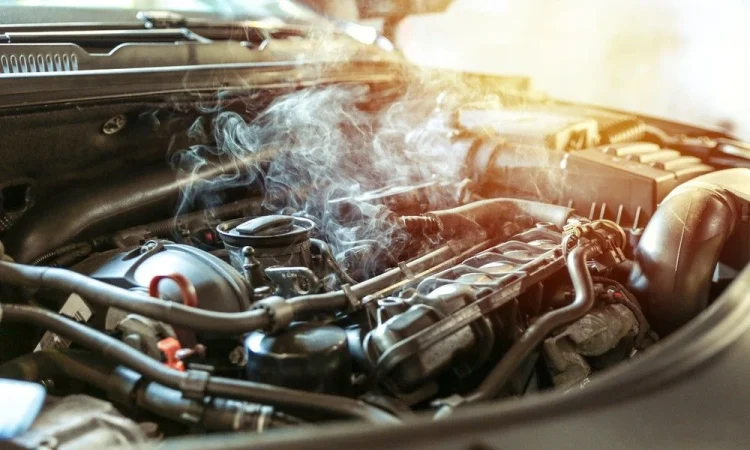
Your engine just let go. Maybe it threw a rod, maybe the head gasket finally gave up, maybe the compression test came back ugly. Now you are standing in front of a car that was running fine last month and a repair bill that could run into the thousands. The instinct is to panic. The better move is to run the numbers like a business decision, because that is exactly what it is.
There are really only three paths, and the right one depends on the car, the cost, and how long you plan to keep it. Treat the choice as a simple cost-benefit analysis and the answer usually becomes obvious.
Path one: rebuild the engine you have
Rebuilding means tearing down your existing engine, machining what needs machining, and reassembling with new bearings, rings, gaskets, and whatever else the inspection turns up. The appeal is a known history. You know how the car was driven and maintained, and you end up with fresh internals.
The catch is cost and uncertainty. A rebuild starts as a quote and grows once the machine shop opens things up. Cracked components, worn bores, and warped surfaces all add line items. Labor is significant because the work is skilled and time-consuming. For a common four-cylinder, a quality rebuild can land in the same range as a complete replacement engine, and on more complex motors it can exceed it. Rebuild when the platform is hard to source, the original engine has sentimental or collector value, or you specifically want to upgrade internals along the way.
Path two: drop in a low-mileage import
For most mainstream Japanese vehicles, a JDM replacement is the value play. Instead of paying to revive a tired engine, you install a different one that already has a clean bill of health and relatively low miles. The labor to remove and install is similar to a rebuild’s removal and reinstall steps, but you skip the machine shop entirely and the timeline shortens dramatically.
The financial logic is straightforward. A tested import unit with a warranty often costs less than a full rebuild and far less than a new crate engine, while getting the car back on the road faster. To gauge whether your specific engine is available and what it runs, visit this site and search by make and model: visit this site. Pull a real number for your platform before you make the call, because the swap math only works if you know the actual price.
This path makes the most sense on popular Honda, Toyota, Nissan, and Subaru platforms, where supply is deep and prices are competitive. It is the route the swap community defaults to for good reason.
A worked example
Put real numbers to it and the logic gets concrete. Say you have a high-mileage but otherwise solid Honda sedan worth around four thousand dollars in running condition. The engine has a spun bearing. A quality rebuild quote comes in with machine work and labor at a figure that makes you wince. A tested low-mileage import for the same platform, with a warranty, lands meaningfully below that rebuild number, and the shop can have it installed in a fraction of the time.
In that scenario the choice almost writes itself. You spend less, you wait less, and you end up with a different engine that has a clean bill of health rather than a revived version of the one that just failed. Now change one variable. Suppose the same car also needs a transmission soon and the body is rough. Add those costs to even the cheaper engine path and compare the total against a different used car in better shape. Suddenly walking away looks reasonable. The engine decision was never really about the engine alone. It was about the total cost of keeping this specific car alive versus the alternatives.
Path three: cut your losses
Sometimes the smart financial answer is to stop spending on the car. If the vehicle’s market value is low, the body and transmission are also tired, and the engine repair approaches or exceeds what the car is worth, you may be throwing good money after bad.
Be honest about the rest of the vehicle. A fresh engine in a chassis with a failing transmission, rusted-out suspension, and 250,000 hard miles is not a rescue, it is a down payment on the next repair. Run the total: engine solution plus any other deferred maintenance, against the cost of a different used vehicle in better overall shape. If the numbers favor walking away, walk away without guilt.
A simple framework for the decision
Strip it down to four questions and the path reveals itself.
What is the car worth in running condition? This sets your ceiling. Spending more than the car is worth only makes sense for vehicles with collector status or personal value you are willing to pay for.
How is the rest of the vehicle? A solid chassis, good transmission, and clean body justify investment. A tired everything-else does not.
What does each path actually cost for your specific engine? Get a rebuild quote and a replacement-engine price for your exact platform. Do not estimate, because the gap between platforms is large.
How long will you keep it? If you plan to drive the car for years, the higher upfront cost of a quality solution amortizes well. If you are selling soon, the cheapest path that makes the car sellable wins.
Reading the answer
Run those four questions and a pattern emerges. Daily-driver Honda or Toyota with a good body and a dead engine? A low-mileage import almost always wins on cost and speed. Rare or collector platform you intend to keep? A rebuild protects originality and lets you upgrade. A worn-out car worth little with problems beyond the engine? Walking away is the disciplined choice.
The owners who regret their decision are usually the ones who acted on emotion. They rebuilt a common engine at a premium when a swap was cheaper, or they sank money into a chassis that was finished anyway. The ones who come out ahead treated a stressful moment as a calculation. They priced every option for their exact vehicle, weighed it against the car’s real value and condition, and chose with their head.
Before you pull the trigger on any path, get firm numbers rather than estimates. A rebuild quote should come from a shop that has actually inspected the engine, and a replacement price should be for your exact platform, delivered, with the warranty terms spelled out. Vague ballpark figures are how people end up regretting the choice. Real numbers let the framework do its job.
A dead engine feels like a crisis. Handled with a clear framework and real numbers, it is just a decision, and often a cheaper one than the panic in your gut suggests.