Every month, another batch of Japanese cars turns 25 years old and becomes legal to import into the United States without federal compliance work. In 2026, that rolling line reaches cars built in 2001, closing out a stretch of production that many enthusiasts regard as the high point of Japan’s performance era. The effects on pricing, availability, and buyer behavior are already easy to see for anyone watching listings and auction results.
A rule written for a different purpose
The exemption traces back to the Imported Vehicle Safety Compliance Act of 1988, which Congress passed in response to the booming gray market of the 1980s, when private importers were bringing in European cars that had never been certified for American roads. The law allowed vehicles at least 25 years old to bypass the Federal Motor Vehicle Safety Standards. The EPA applies its own, shorter threshold of 21 years for emissions. Lawmakers had vintage collectibles in mind, and nobody in that room anticipated a generation of buyers who grew up racing Skylines in video games and would spend two decades waiting for the real thing to age into eligibility.
Eligibility is calculated to the month of manufacture, which is a detail that trips up first-time buyers. A car built in November 2001 does not qualify until November 2026, regardless of its registered model year. Reputable importers verify the build date from the chassis plate and export documents before a car ever leaves Japan.
The class of 1999 to 2001
The late 1990s marked a peculiar moment in Japanese car design. Manufacturers operated under an informal agreement that capped advertised output at 280 PS, so engineers poured their effort into chassis tuning, electronics, and drivetrain sophistication instead. The result was a wave of cars that were quick, precise, and often overbuilt for their stated power.
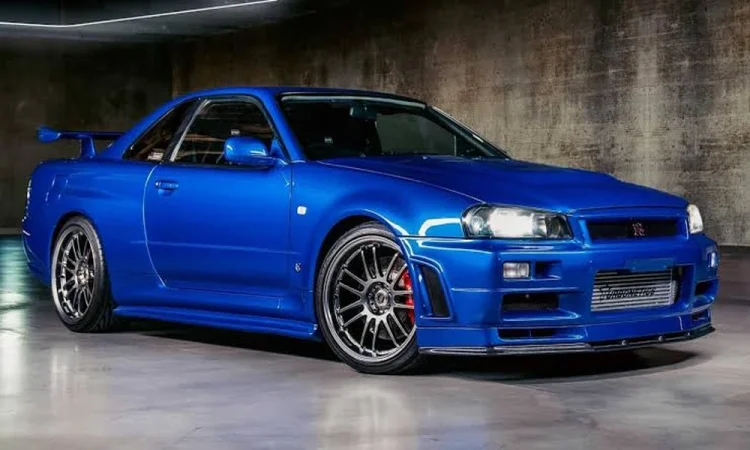
Many of the standouts from this period were never offered new in North America. The Nissan Silvia S15 arrived in 1999 with a revised SR20DET and a six-speed gearbox in Spec-R form. The R34 Skyline range included the GT25 Turbo, a rear-drive model with the RB25DET NEO engine that sits well below GT-R pricing. The Toyota Chaser JZX100 Tourer V paired the 1JZ-GTE with a manual gearbox in a four-door body that looked like a family sedan. The Altezza RS200 used a high-revving 3S-GE engine that Lexus never brought to the US version, sold here as the IS300. Honda’s Integra Type R DC2 and the S2000 AP1 round out a list of cars that remain benchmarks for handling today.
This concentration of desirable models has changed the shape of dealer inventories. Specialist importers who focus on high-quality JDM classic cars now stock late-generation models alongside the older staples of the early 1990s, which lets shoppers compare an S15 against a 180SX, or a JZX100 against an earlier Chaser, before committing to a generation. That kind of side-by-side comparison was rare only a few years ago, when most of these later cars were still off limits.
Supply is more fragile than it looks
Japan’s shaken inspection regime makes older cars expensive to keep on the road, and for decades owners retired them after ten to thirteen years. That pattern fed a steady export stream to the United States, Australia, New Zealand, the United Kingdom, and several other markets. The same cars now draw bidders from all of those countries at once, and domestic Japanese collectors have become far more reluctant to let clean examples go.
Condition is the real constraint. A 25-year-old performance car has usually lived one of two lives: pampered weekend use or hard driving with a string of owners and modifications. Unmodified, low-mileage examples of the S15, R34, and JZX100 represent a small slice of surviving production, and auction results for those cars have climbed faster than the market as a whole. Currency movements add another variable, since a weaker yen makes Japanese auctions cheaper for foreign buyers and a stronger one pushes prices up overnight.
Price behavior follows a pattern
Watchers of this market have seen the same cycle repeat with each newly eligible model. Prices tend to rise in the months before eligibility as buyers anticipate demand. A wave of imports follows the eligibility date, sometimes softening prices briefly as supply catches up. Over the following years, the best examples separate from the rest, and values for documented, original cars continue upward while tired or heavily modified ones level off.
The R32 GT-R, which became eligible in 2014 and 2015, is the textbook example. Early buyers found cars at prices that now look modest, and the gap between average and exceptional examples has widened steadily since. Valuation guides from Hagerty and similar sources now track several JDM models, a sign that these cars have moved from niche enthusiast territory into the mainstream collector market.
The overlooked side of the market
Sports cars grab headlines, but a large share of imports falls outside that category. Luxury sedans such as the Toyota Celsior and Aristo, performance wagons like the Nissan Stagea and Subaru Legacy GT-B, and four-wheel-drive vehicles such as the Land Cruiser 80 Series and Hilux Surf offer Japanese build quality at far lower prices. Kei trucks have developed their own dedicated following among farmers, ranch owners, and small businesses who value their compact size and simple mechanicals.
These vehicles give newer buyers a practical entry point. They tend to be less modified, easier to insure, and more forgiving of daily use than a high-strung turbo coupe, while still carrying the appeal of a car that few neighbors will recognize.
What 2027 and beyond will bring
The coming years will add some of the most anticipated models of the era. Cars built in 2002 include the final R34 GT-R variants, the last S15 Silvias, and the Mazda RX-7 Spirit R that closed out the FD generation. Each of these will likely follow the familiar cycle of anticipation, import surge, and gradual separation between average and exceptional cars. Buyers planning ahead are already studying production numbers and build dates for these models.
Reading the market as a buyer
For anyone shopping now, the practical takeaways are straightforward. Documentation and originality carry more weight every year, and a car with auction sheets, service records, and clean import paperwork will hold value better than a cheaper one with gaps in its story. The build month matters as much as the model year. The broader category of JDM vehicles is also wider than the handful of famous nameplates, and patience often rewards buyers who look beyond the obvious choices.
The 25-year rule was never designed to create a collector market, yet it has shaped one with remarkable consistency. As the eligibility line keeps moving, the cars of 1999 to 2001 are having their moment in the United States.